Viewing entries tagged
farming the future

Who Feeds Us?

Who Feeds Us?

This Spring, Farming The Future launched a Coronavirus emergency response fund: a collaboration between The A Team Foundation, the Roddick Foundation, Thirty Percy and the Samworth Foundation, offering financial support for initiatives that rose to meet the immediate crisis whilst building longer-term resilience. One of the those to receive funding was the award-winning podcast, Farmerama, for a new series called ‘Who Feeds Us?’ A collection of stories about some of the people who produce our food, the 6-part series explores what it takes to feed and nourish communities in the time of a pandemic. The experiences of growers, suppliers, academics, activists, authors and chefs, offers insight into how food that is nourishing for people and the planet might be made accessible to all. The podcast is produced by Jo Barratt, Abby Rose, and Katie Revell, with a team of 23 people, brought together by advisor Dee Woods. Illustrations by Hannah Grace


Ep-1-scaled.jpg

Who feeds us? Episode #1: The Hungry Gap

Whilst the UK went into lockdown this March, supermarket shelves stood empty and many people began to question how we might feed ourselves. The idea of localised food systems went from being a distant dream to a substantial means of sustenance for many people across the country. So, who and what made up those localised food systems? Where did this sudden burst of community provision come from?

Episode #1 covers many corners of the food system, from those supplying high-end restaurants to those on the frontline of emergency food responses. Talking about how their relationships within the industry and community helped them to face new and existing challenges, we hear from farmerJane Scotter and chef, Skye Gyngell; from Angus Buchanan-Smith in Scotland, who grew his farm-to-table restaurant into a CSA scheme and education project; from two London beekeepersSalma and Khalil Attan, who divulge some of the benefits of lockdown for bees; and from Ursula Myrie, founder of Sheffield community food project - the Food Pharmacy.


Ep-2-scaled.jpg

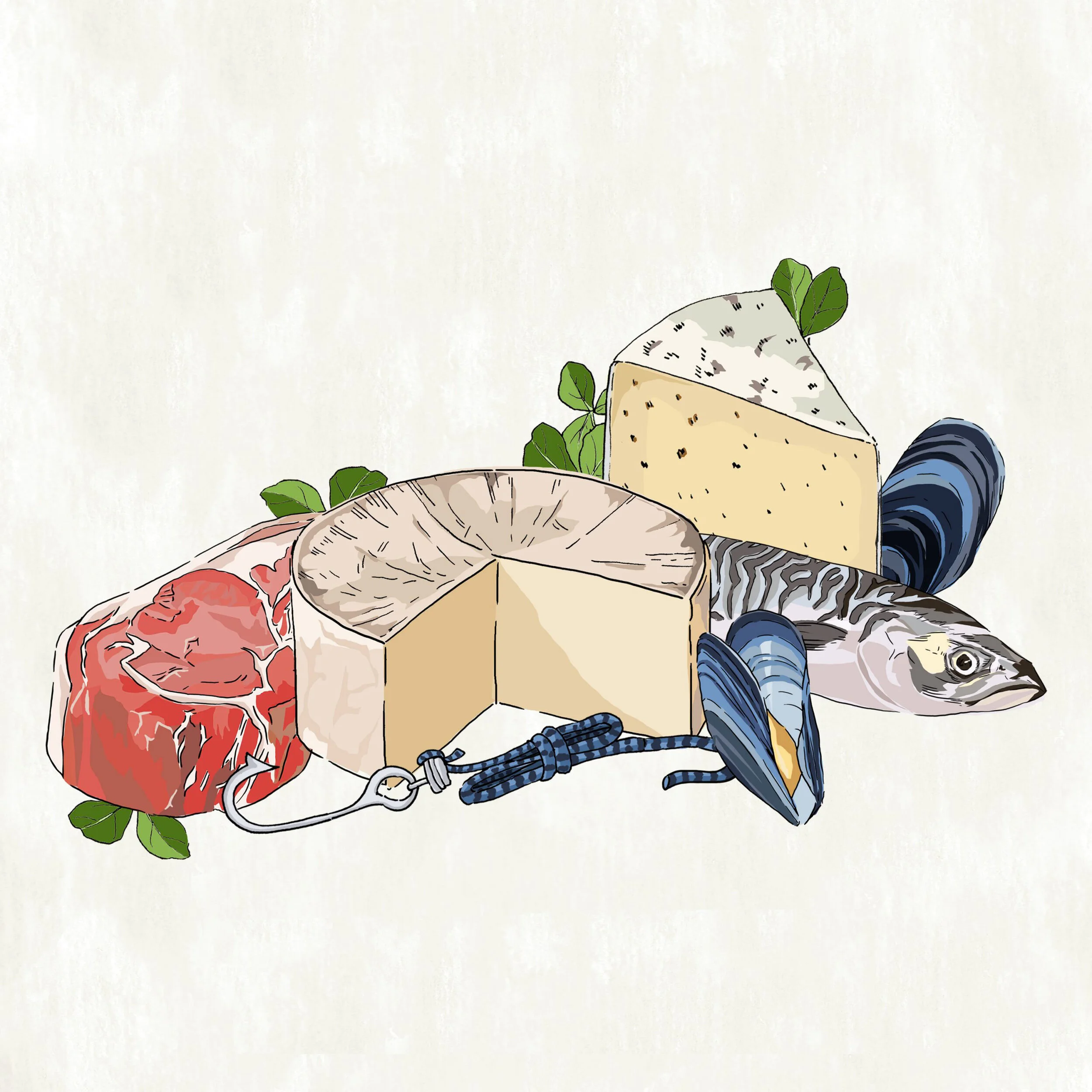
Who Feeds Us? #2: Land, Animal, Journey

Episode #2 asks how the pandemic has changed the people who care for the animals that feed us, exploring how it has impacted their relationships with work and their communities. How have the perspectives of those producing fish, cheese and meat in the UK been affected by their experiences of the pandemic, and how are they adapting to life in lockdown?

First crossing the Irish Sea to Ballylisk in County Armagh, Northern Ireland, we meet Dean Wright, a dairy farmer and cheese-maker who began to deliver milk and other artisan products to his local community at the onset of lockdown. Heading to Wales, we hear from Muhsen Hassanin, a smallholder and halal slaughter-man who provides regeneratively farmed meat to Muslims across the UK. And lastly, we meet John Martin Tulloch, a fishmonger in the Shetland Isles who lost his international market, but fortunately found a new customer base much closer to home.


Ep-3-scaled.jpg

Who Feeds Us? #3: Growing Our Own

As supermarkets struggled to restock fruit and veg, the idea of ‘growing your own’ took on new significance. To grow your own food, the first thing you need are seeds. For centuries farmers saved their seeds, which adapted to their environments and created local varieties. With the development of commercial seeds that can’t be harvested or re-sown, crops grew less resilient and sustainable. Now, by preserving open-pollinated seeds, communities around the world are helping to ensure their own food security in the face of a climate crisis as well as the current pandemic.

Episode #3 begins in the Midlands, where we hear from Astrid Guillabeau, a Birmingham-based mother who began asking how we can grow our own food in cities. Then it’s over to Walsall-based landworker and founder of No Diggity Gardens, Neville Portas, on the importance of self-sufficiency for his community. In London we hear from Dee Woods, activist and co-founder of Granville Community Kitchen, about the importance of human connection and empowerment through growing food. And lastly, we meet Helene Schulze, a passionate seed saver who tells us why seed sovereignty is vital for a resilient food future.


Ep-4-scaled.jpg

Who Feeds Us? #4: Whole Meal

When flour became scarce, many who mightn’t usually seek out a local bakery, let alone a local mill, started to do just that. In episode #4 we find out how this sudden upsurge in demand presented a huge challenge for bakers and millers – a challenge met with enthusiasm and ingenuity. Investigating connections between bread, mills, the farms that grow the grain, and the soil in which its grown, learn about the system behind most of the bread eaten in the UK, and the localised, smaller-scale alternatives, which found it could sustain itself during the pandemic.

Hear from Abigail Holsborough, the head miller at Brixton Windmill in South London and at the core of its local community as flour ran low. Meet Rosy Benson, who founded Bristol bakery, Bread and Roses, to provide nourishing loaves to those who needed them most. Then head to a small village in the Highlands of Scotland to hear from Rosie Gray, who set up her bakery, Reviving Foods, in a converted horse-box.


Ep-5-scaled.jpg

Who Feeds Us? #5: Cultivating Abundance

Episode #5 is set in the West Midlands, where it examines how the pandemic has highlighted connections between food, health, community and identity. Learning about the resources and needs of individuals and communities at this time, particularly those of African descent, we ask how access to land and growing space can feed us in different ways, through experiences of abundance and the ability to share in it.

We hear from Lynda Macfarlane, the founder of Vegan Vybes, a community group in Birmingham championing cruelty-free, creative ways of living and communicating. Farmerama collaborator and co-founder of KiondoAndre Reid, shares his story of setting up a WhatsApp group for his community to grow food and become more resilient. And academic, Dr Lisa Palmer, talks about her ‘Digging Around’ project, which researched the long history of African and Caribbean communities in Britain growing food and maintaining connections to their heritage through allotment gardening.

Ep-6-scaled.jpg

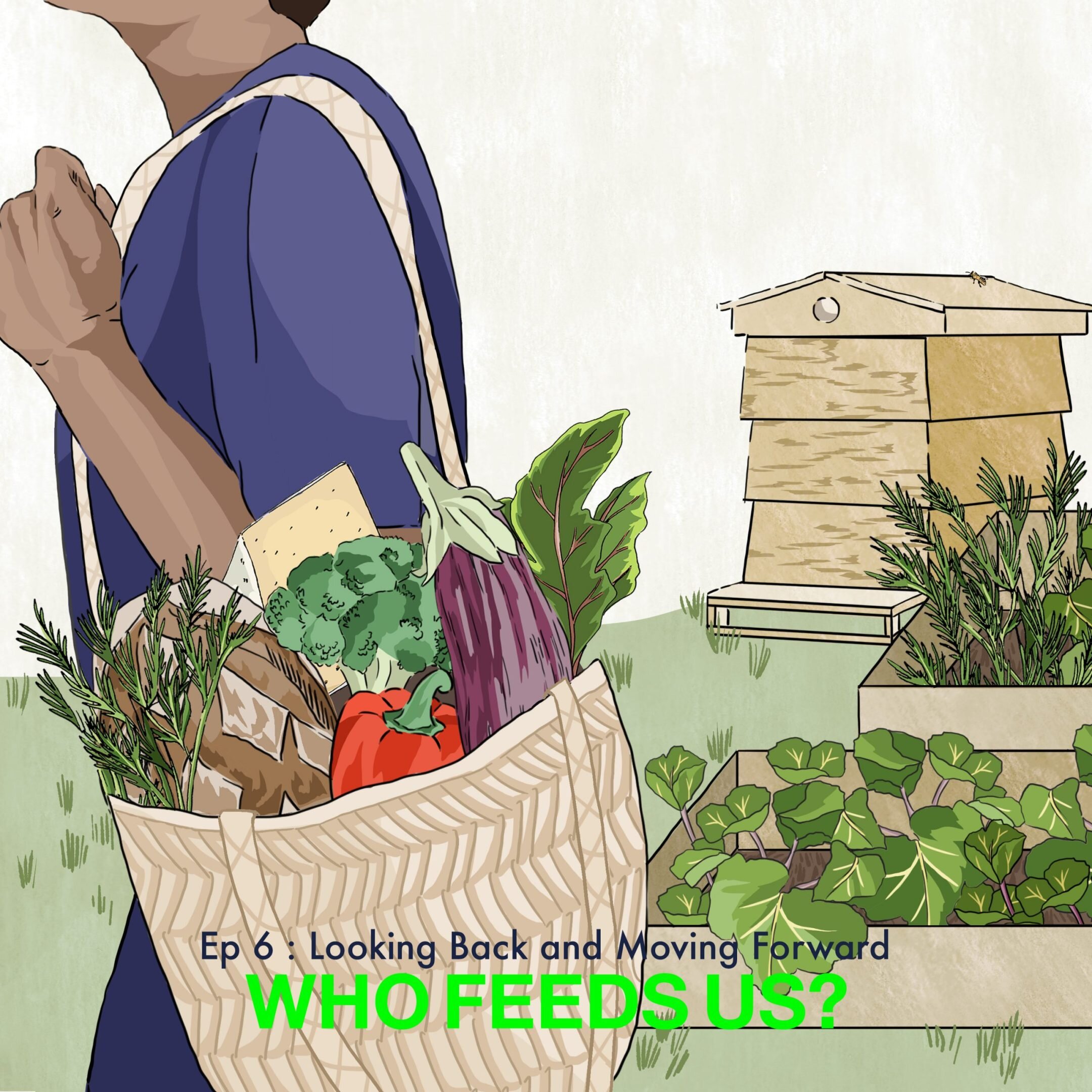
Who Feeds Us? #6: Looking Back and Moving Forward

The final instalment of the series revisits the people introduced in previous episodes, and unravels the common threads that bind these seemingly disparate voices together, such as reverence, gratitude, sovereignty, dignity and abundance. We hear more about they’ve learnt so far this year and their visions for resilient, localised food economies growing into the future.

Food is clearly not just a question of calories; food is nourishment for the body and soul. Food is about community, culture and our relationship with each other and with the Earth. We are all part of the food system.  

The journey towards a truly resilient, humane and nourishing food system is complicated and will most likely be a bumpy one. The series closes with an invitation to embrace that complexity, to dive in, to seek out and connect with those who feed us, because food doesn’t come from shelves, food comes from the soil, the sea, and the hands of people. This is who feeds us.
County Farms - 'Public Land for Public Good'

County Farms - 'Public Land for Public Good'

.

Written by Graeme Willis from Campaign to Protect Rural England. This blog post is the fifth of the Farming the Future series. Their project; Public Land for Public Good is a collaboration with Shared Assets and New Economics Foundation.

Each month, the A Team Foundation will be showcasing a grantee from the fund and how the support is helping to achieve their goals and ambitions.

Momentous change is affecting many aspects of our lives with Covid-19, shaking up the pieces on the chessboard – few of us can really predict when and where they will all land.  Seismic shifts like this are turning us into futurologists, reflecting on how we can build back better after Covid and talking of the ‘new normal’. That cannot mean a return to the old and business as usual.

Tom Byron, Unsplash

For those working on farming issues, these were already times of momentous change. Our imminent exit from the EU will alter our future trading relationships with potentially huge impacts on farming. A paradigm shift in policy is already afoot. Two major farming policy papers since 2018 have set out a new direction for agriculture with the legal framework to be set by the Agriculture Bill now finally progressing through Parliament [1].

From 2021, when the new Environmental Land Management scheme (ELMS) begins its pilot nationally, thousands of farmers will start to get paid for delivering a raft of public goods instead of being paid on the amount of land they farm. The radical market changes caused by the lockdown have amplified the fragility of farmer incomes and the inequity of a supply chain that almost never seems to work in their favour; and the realities of climate change are biting with volatile weather breaking new records (exceptional flooding in early 2020 followed by the driest spring on record); together they from a perfect storm for food producers.

These make it difficult to see farming slipping back to business as usual, whatever happens in the wider economy. Inevitable change means inevitable adaptation. So while nothing will continue ‘as usual’, the word ‘business’ is apposite. Farms are businesses and as such they must evolve and innovate if only to stand still. Happily or unhappily, the pandemic has emphasised this truth. But where does this leave farming?

The need to change more rapidly than ever brings into sharp focus the needs of farming as a whole to attract talented people with the skills, entrepreneurship and a passion for working the land. It needs to address too access to land and to the finance required for the transition. It also brings into question what the role of government should be in shaping and supporting the change necessary.

Some of the answers can be found in ‘The Future of Farming Review Report’, published in 2013 in a distant pre-Covid age and produced for government by a group of sector professionals [2]. It’s a wide ranging scan of the sector, primarily from the perspective of those who are in it (or who seek to enter it) and its conclusions are well worth revisiting. As David Fursdon, Review Group chair, sums up in his foreword:

“…the balance against new opportunity does seem to have swung too far in agriculture with high land prices, the CAP supporting the status quo, tenancies rarer and few other business opportunities. This is not healthy and the solution cannot depend on market forces alone.”

The report makes clear farming in 2013 needed to attract a pool of talented, resourceful, skilled and entrepreneurial people if it was to be a competitive productive sector, but also one that could deliver on the wider challenges of becoming sustainable and tackling the serious environmental challenges ahead, not least climate change.

The Review Group also concluded that the pressure from market forces and economies of scale have caused farms to grow and simplify their businesses at the expense of intermediate and smaller farms. It went on to recognise that for those who want to farm in their own right and start their own business: “This, in our view, is simply not going to be possible for all but a very few.”

With this stark assessment, they also expressed concern about the active sell off of county council farms as ‘a great loss for the sector’ with the group strongly supporting their retention, and made two key recommendations:

  1. for an assessment to be carried out of the role of county farms in providing opportunities for new entrants and for guidance to be produced by government and;  

  2. for the sector to ‘encourage Local Authorities to retain their farms and look for innovative ways to manage them’ [2].

The loss of farm diversity in general remains an overlooked issue despite the widespread debates around the future of farming and farm support. CPRE analysis shows small to intermediate size farms continue to disappear  – farms under 100ha fell by a quarter down from 106,000 in 2005 to 81,000 in 2017 and the area they managed went down by a fifth, over 500,000 ha or nearly 1.4 million acres [3].  It should be clear we need to retain an ecosystem of differing farm sizes with a mix of ownership and tenancies, both public and private, to ensure wide and more equitable access to farming.

As for county council farms, ‘Good Practice Guidance’ was produced by TRIG in 2015 [3]. This confirmed that county farm estates have haemorrhaged land and farm holdings since 1966 with the loss of over 60,000 ha and 10,000 holdings by 2013. Research done by Guy Shrubsole (of Who Owns England), New Economics Foundation (NEF) and Shared Assets in 2019, as well as analysis by CPRE, confirms the colossal loss of council farm land over the past 40 or more years and continued falls since 2010 with nearly 9,000 ha or 22,000 acres fewer.

The loss of farm diversity in general remains an overlooked issue despite the widespread debates around the future of farming and farm support. CPRE analysis shows small to intermediate size farms continue to disappear  – farms under 100ha fell by a quarter down from 106,000 in 2005 to 81,000 in 2017 and the area they managed went down by a fifth, over 500,000 ha or nearly 1.4 million acres [3].  It should be clear we need to retain an ecosystem of differing farm sizes with a mix of ownership and tenancies, both public and private, to ensure wide and more equitable access to farming.

As for county council farms, ‘Good Practice Guidance’ was produced by TRIG in 2015 [3]. This confirmed that county farm estates have haemorrhaged land and farm holdings since 1966 with the loss of over 60,000 ha and 10,000 holdings by 2013. Research done by Guy Shrubsole (of Who Owns England), New Economics Foundation (NEF) and Shared Assets in 2019, as well as analysis by CPRE, confirms the colossal loss of council farm land over the past 40 or more years and continued falls since 2010 with nearly 9,000 ha or 22,000 acres fewer.

County farms that can offer a vital first step on the farming ladder are being sold off by local authorities struggling with ongoing austerity, they are seen as a ‘thing of the past ‘ and local authorities seem unable or unwilling to reimagine how their public land holdings could contribute to a host of pressing challenges for a new age. More ominously, despite the 2013 report findings and the 2015 guidance, the rate of loss has drastically accelerated - in the past three years it has quadrupled to over 2,000 ha a year (from 0.5% to 2.2% loss pa). [4]

So, seven years on since the Review report, little has improved to support entry to farming. True, we’re on the cusp of leaving the Common Agricultural Policy with a major shift in how central government will fund farming and land prices have already fallen from their peak, but the need for innovative, entrepreneurial new talent is greater, given the challenges of the climate and biodiversity emergencies. New blood is needed to reinvigorate an ageing sector. Yet, with the falling diversity of farm sizes and decline of county farms comes a loss of life chances for first-time farmers as well as others wanting to progress in the sector.

Stepping back a little, the county farms work done by Guy Shrubsole, Hannah Wheatley at NEF, and Kim Graham and Kate Swade at Shared Assets for CPRE in 2019, proved timely and fruitful. The opportunity came to bid for Farming the Future funding over the summer in 2019 and enabled CPRE, NEF and Shared Assets to collaborate further and plan for a second more ambitious project. This secured generous support as core funding from the A-Team and Roddick Foundations and a top-up grant from Esmee Fairbairn Foundation.

This project, now underway under lockdown, aims to create a new wider vision for council farms and their potential to deliver a range of public benefits including exploring new models and approaches to how they might be managed and kept in public ownership. We plan to promote this vision to key decision makers and the sector, to build consensus and a stronger commitment to securing their future for the public good.

This boils down to three main strands of activity:

  1. We are revisiting the evidence base and will, through interviews and case studies, show where beacon councils have the right strategies and plans in place and are already using their farmland to deliver a wide range of public benefits, such as locking up carbon in trees or increasing public access to nature and wildlife.    

  2. Recognising that farm sell-offs are likely to continue, we are exploring different models from the UK and abroad of public or community ownership and land management. We will test these models with councils alongside their potential to work at scale. Then we plan to work collaboratively with practitioners in and outside councils to co-create a vision for the future of county farms.

  3. We are pressing for the right policies nationally and locally to better support council farm estates and investment in them for new entrants and wider public purposes. We’re tabling amendments to the Agriculture Bill as it proceeds through Parliament with council farms already debated in the Commons at Committee stage and at 2nd Reading in the Lords.

markus-spiske-sFydXGrt5OA-unsplash.jpg

In 2019 we called for national level, legal protection for council farms to prevent their rapid sell-off, alongside government investment to support their growth and development, as well as promotion of their wider value for the community by councils. In February, the government committed to making investments to create opportunities for new entrants. This is a significant step forward but the amount of financial support, when it will be available and for what purposes beyond new tenancies are still unclear.  So, we want to work closely with Defra, councils, tenants and prospective new entrants to help turn this broad commitment into a workable programme.

There is much to play for and at a crucial time for the project to be engaging with the issues. In some respects the trends remain unpromising with council farms disappearing at an accelerating rate, access to them in many areas a postcode lottery and prospects receding for those from a diversity of backgrounds and experience and those without capital, land or family backing to get into farming.

The calls for a green recovery are becoming louder and from every quarter from green NGOs to the CBI. As we emerge from the current phase of the pandemic and government invests in building back better, this is a critical moment for that investment to pivot towards delivering net zero carbon, an environmentally sustainable and socially just economic recovery, and fairer more equitable access to resources, opportunities, health and well-being.

With the backdrop of immense change, it is a pivotal moment to rethink what is possible and what can emerge from the undoubted damage that has been wrought whether from events or the absence of action and failures of policy to date. The decisions government nationally and locally make as they invest in future should be tested against the aims of meeting the climate and nature emergency. The way we use all of our public resources, especially public land held for public benefit – county farms – must be an integral part of that.

If you would like to learn more about the Campaign for Rural Protection’s work and how to get involved, head to https://www.cpre.org.uk/


[1] Defra,  Health and Harmony: the future for food, farming and the environment in a Green Brexit, February 2018; Defra, Farming for the future Policy and progress update, February 2020

[2] Defra, Future Of Farming Review Report, July 2013; the review  group included representatives of the Country Land and Business Association, National Farmers Union and Tenant Farmers Association, the Bank of England and Central Association of Agricultural Valuers; Defra, 2013 above pp20-24

[3] Defra, Agriculture in the UK 2018, 2019 p7 Table 2.4 Numbers of holdings by size group and country at June 2017 (b) compared to 2005 June data ( see CPRE, Uncertain harvest – does the loss of farms matter, 2017 p8 table 2)

[4] The Tenancy Reform Industry Group (TRIG), Local Authority Rural Estate Asset Management Planning GOOD PRACTICE GUIDANCE, 2015, p4

[6] CPRE, Reviving county farms, December 2019; see p3 & subsequent analysis by CPRE of The Defra, 69th Annual Report to Parliament on Local Authority Smallholdings in England (1 April 2018 to 31 March 2019), 2020


Graeme-Willis.jpg

Author: Graeme Willis

Graeme joined CPRE in 2006 and launched new tranquillity and intrusion maps. He went on to manage research on local food webs across England. More recently he has written on the loss of smaller farms (Uncertain harvest, 2017) and on agroecological management of soils (Back to the land, 2018). His current interests are in promoting better use of county farms and changing land use to address the climate emergency.

Graeme was previously a senior lecturer at Anglia Ruskin University and tutor and research officer at Essex University where he gained an M.Env in Environment, Science and Society. He grew up in Cheshire where he regularly worked on family farms.


Read More about Farming the Future 2019